
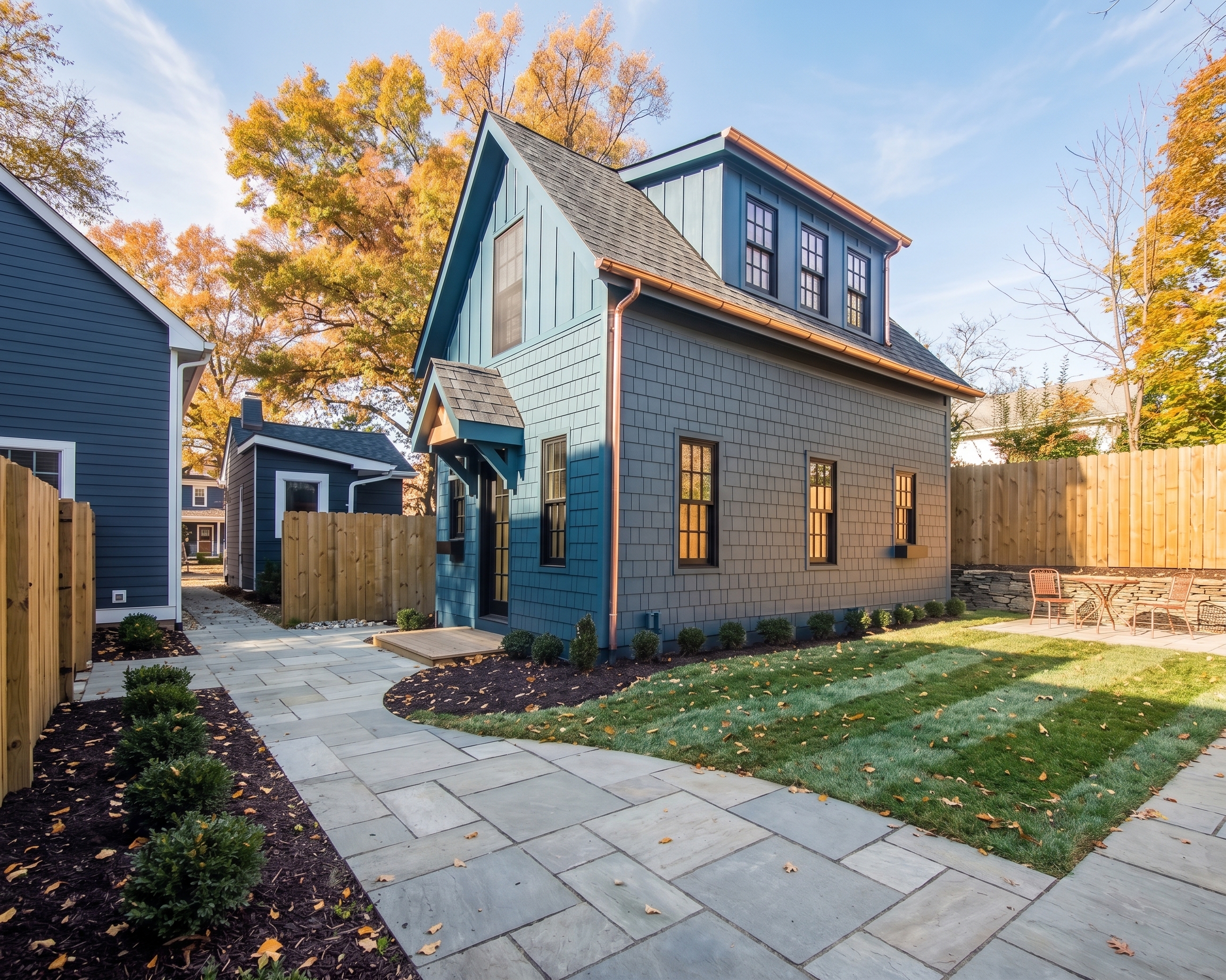
Virginia Legalized Backyard Housing. Most of Northern Virginia Gets to Opt Out.
A new state law gives Virginia homeowners a by-right accessory dwelling unit starting July 1, 2027. Fairfax, Arlington and Alexandria are likely exempt from it. And in the counties it does cover, your HOA still outranks the state.
By Chris Colgan | Real Nova Network • Updated August 2026
Quick Answer
When does Virginia's new ADU law take effect? July 1, 2027. Nothing changes immediately for homeowners under the new statewide standard.
Does this mean every Virginia homeowner can build an ADU? No. Localities that adopted qualifying ADU ordinances before January 1, 2026 may be exempt, and private HOA restrictions remain enforceable.
Does Virginia's law override my HOA? No. Recorded HOA covenants, condominium instruments and other private property restrictions are specifically preserved by the statute.
Which Northern Virginia jurisdiction should homeowners watch most closely? Prince William County may be one of the most consequential jurisdictions because it does not appear to have the same longstanding comprehensive ADU framework as Fairfax, Arlington and Alexandria.
What's in This Guide
| Virginia ADU Law | Key Detail |
|---|---|
| Effective Date | July 1, 2027 |
| Legislation | Senate Bill 531 / Chapter 895 |
| Senate Vote | 21–19 |
| House Vote | 62–37 |
| ADU Permit Fee | Capped at $500 for the ADU permit itself |
| HOA Restrictions | Private covenants remain enforceable |
| Existing Local Ordinances | Certain ordinances adopted before January 1, 2026 may qualify for an exemption |
Driving the News
Gov. Abigail Spanberger signed Senate Bill 531 on April 13, 2026.
It became Chapter 895 of the Acts of Assembly and added a new section to the Code of Virginia, § 15.2-2292.3 .
The core change is significant: zoning ordinances in covered single-family districts are deemed to include accessory dwelling units as a permitted accessory use, and a locality cannot simply create additional requirements beyond those authorized by the statute.
- Effective date: July 1, 2027. Nothing changes today.
- Sponsors: Sen. Kannan Srinivasan of Loudoun County and Sen. Saddam Salim of Fairfax County.
- The vote was close: 21–19 in the Senate on February 12 and 62–37 in the House on March 4. View the full bill history.
Why It Matters
For the first time, Virginia has created a statewide floor for backyard cottages, garage apartments, basement suites and other accessory dwelling units in the jurisdictions covered by the law.
A qualifying project cannot simply be killed because a Board of Zoning Appeals or nearby residents oppose the concept of an ADU.
That's a structural change in how residential land can be used. It creates the potential to add housing capacity one lot at a time without creating an entirely new subdivision.
What the State Locked In
Permit Fee Capped at $500
The ADU permit fee itself can be no more than $500.
That does not mean the entire project costs $500 in government fees. Building, electrical, plumbing, mechanical, site and other required permits remain separate.
Setback Parity — Sort Of
Localities cannot impose rear or side setbacks on an ADU that are greater than what applies to the primary dwelling or accessory structures on the lot, whichever is less.
The Family Requirement Is Gone
Where the state law applies, localities cannot require the ADU occupant to be related by blood or marriage to the occupant of the primary dwelling.
Yes, But: Your HOA Is Untouched
This may be the most important part of the entire law for Northern Virginia homeowners.
Subsection F says the statute does not supersede private agreements concerning the use of real property. That includes recorded declarations, covenants, condominium instruments, common-interest-community declarations and property owners' association declarations.
It did not preempt your HOA.
That distinction can matter enormously in covenant-controlled communities across Bristow, Gainesville, Brambleton, South Riding, Lake Ridge, Kingstowne, Broadlands and many other Northern Virginia subdivisions.
Prince William County explicitly notes that the county does not have authority over private homeowner associations. Read Prince William County's HOA information.
Loudoun County provides similar guidance. Read Loudoun County's HOA information.
The Catch: The Grandfather Clause
Subsection I exempts a locality that adopted an accessory dwelling unit ordinance before January 1, 2026.
Fairfax County ALU rules →
Arlington Accessory Dwelling Permit →
Alexandria ADU information →
Loudoun County official website →
That makes Prince William one of the most consequential Northern Virginia jurisdictions to watch as July 2027 approaches.
Prince William County official website →
Prince William is also one of the region's major new-construction markets. Read our breakdown of new construction in Loudoun, Fairfax and Prince William County.
Between the Lines
A 500-Square-Foot Ceiling Can Still Be Legal
The statute allows localities to impose limits involving floor area, lot coverage and impervious area, subject to minimum thresholds.
Those thresholds are 350 square feet on lots smaller than 2,500 square feet and 500 square feet on lots of 2,500 square feet or larger.
Parking Is Still a Lever
Localities can require replacement parking for the primary residence and dedicated parking associated with the ADU. On narrow or constrained lots in older neighborhoods around Manassas and Woodbridge, those requirements could materially affect whether a project works.
What I'd Do Between Now and July 2027
Before spending money on architectural drawings, determine whether your recorded declaration or HOA documents restrict a second dwelling.
The local rules Prince William ultimately adopts could matter more to homeowners than the broad statewide headline.
Homeowners in Fairfax, Arlington, Alexandria and potentially Loudoun should not assume their current local regulations disappear when the statewide law takes effect.
You can begin evaluating lot dimensions, utilities, setbacks, parking and possible designs before July 2027.
Building, electrical, plumbing, mechanical and other construction permits remain separate.
An ADU can become a six-figure project. Before investing significant money, understand your home's current value.
Thinking About an ADU in Northern Virginia?
If you're considering an ADU, buying a property where an ADU matters, or wondering how a major improvement could affect your property's value, our team can help you evaluate the real estate side before you make a decision.
Email info@colganteam.com or start with a current estimate of your home's value.
GET A FREE HOME VALUE ESTIMATEThe Bottom Line
Virginia opened the door to backyard housing, but it also preserved two important exits: qualifying local ordinances that were already in place and private property covenants.
Whether this law actually reaches your property may ultimately come down to two things:
- Your locality's zoning and ordinance history
- Your property's recorded covenants and restrictions
Before spending thousands of dollars on drawings, engineering or design work, figure out exactly which rules apply to your property.
Frequently Asked Questions
Can I build an ADU in Northern Virginia right now?
Does SB 531 override my HOA?
Can I rent my ADU to someone who isn't family?
How big can an ADU be?
Can I sell the ADU separately later?
Keep Reading
About the Chris Colgan Team

Chris Colgan is the founder of Real Nova Network and team leader of the Chris Colgan Team — Real Brokerage LLC — Powered by PLACE.
Through ColganTeam.com and RealNovaNetwork.com, Chris covers Northern Virginia real estate trends, major developments and hyper-local market updates to help buyers and sellers make confident decisions.
Thinking about moving to Northern Virginia? Get the free Northern Virginia Relocation Guide.
Thinking about selling? Get a free home value estimate.
Subscribe to Northern Virginia Living with Chris Colgan on YouTube.
Sources
- Code of Virginia § 15.2-2292.3
- SB 531 Chaptered Text
- SB 531 Bill History and Roll Calls
- Virginia Mercury
- Virginia Association of Counties
Chris Colgan has sold Northern Virginia real estate for more than 20 years and more than $1 billion in volume. This article covers a real estate policy change and is not a political position or legal advice. Confirm your locality's current ordinance, permitting requirements and your property's recorded covenants before committing to an ADU project.
Enjoy this blog post? Click here to subscribe for updates
Leave A Comment