
FAIRFAX COUNTY • PLAN FORWARD • OCTOBER 27, 2026
Fairfax County’s new housing draft could guide more housing in planned growth areas, compatible infill in existing neighborhoods, and stronger preservation of affordable homes. But it is still a draft countywide policy update. It does not rezone your neighbor’s lot, approve a new apartment building or guarantee that home prices will change.
If you’re looking at a home beside an older shopping center, office property or apartment community, this is a document worth understanding. The useful question is what could eventually be proposed at that location—and what separate decisions would still have to happen.
The county released its October 23 Housing Element draft as part of Plan Forward Phase 2. We reviewed the actual clean draft, its preservation appendix, and the companion Economic Development and Revitalization draft. Here is what matters for buyers, owners and renters.
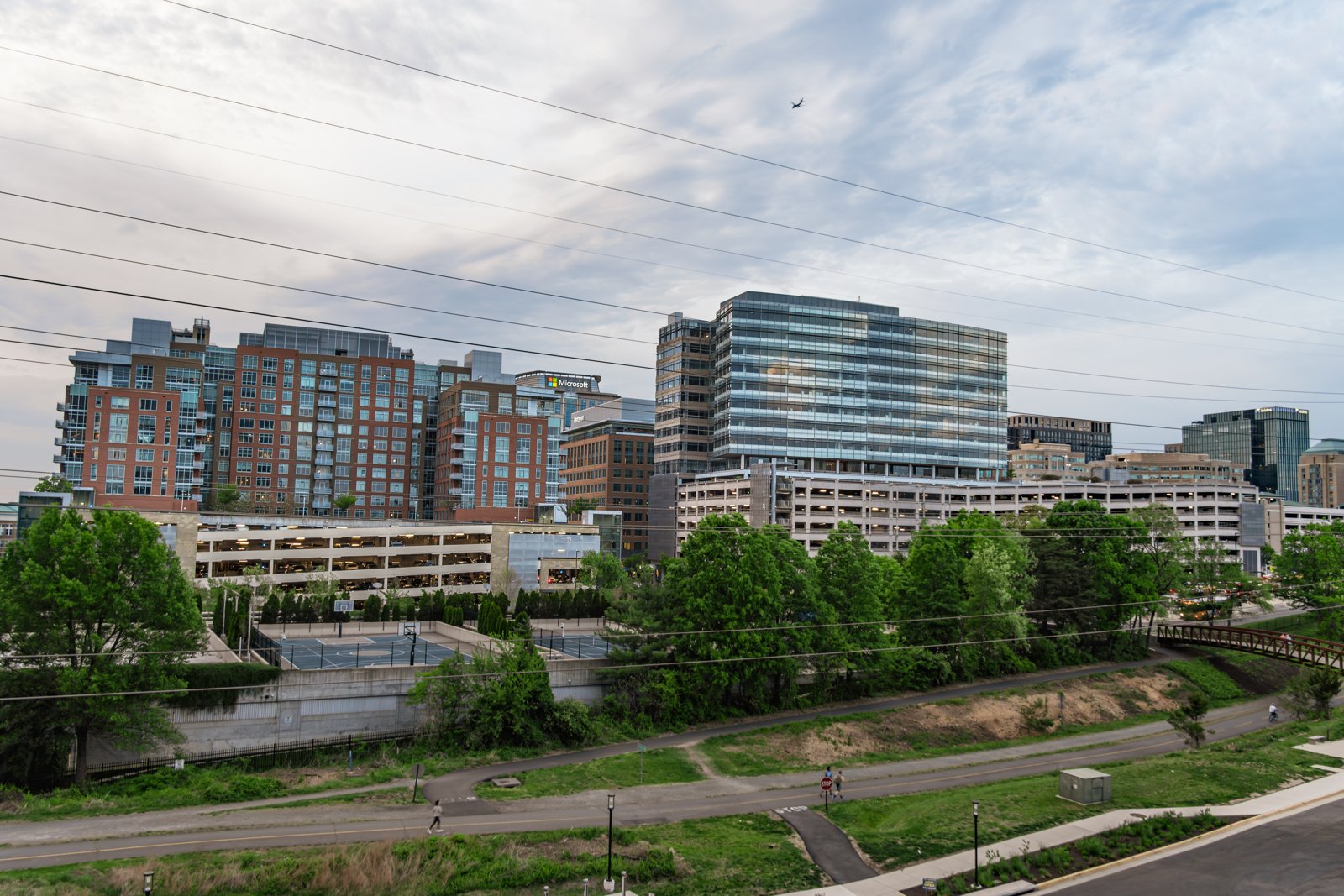
Cover: buildings and roadside near Reston Town Center, from the Colgan Team SEO library. The photograph provides local context; it does not identify a proposed redevelopment site.
The distinction that matters: policy, zoning and a project
A countywide policy plan helps guide future land-use decisions. Zoning governs what a property may be used for and the applicable development standards. A specific development proposal has its own plans, review requirements and status. Those are related layers, but one is not a substitute for another.
| Layer | What to check | What you cannot assume |
|---|---|---|
| Countywide draft policy | Proposed direction on supply, affordability and redevelopment | That the draft is adopted or a particular parcel is rezoned |
| Property’s planning and zoning records | Area Plan recommendations, current zoning and applicable conditions | That a broad policy sentence establishes the final building size |
| Individual application | Submitted plans, proposed units, access, review dates and actual decisions | That a submission or policy preference equals approval or construction |
For a home search, start with the exact parcel and its records in the county’s PLUS system and land-use research resources. A Fairfax mailing address alone does not establish the governing jurisdiction. Confirm whether the property is in the county or a separate city or town before applying county guidance.
1. More housing, with location and infrastructure attached
Housing Objective 1 encourages development that uses planned residential density, higher density in appropriate mixed-use locations with jobs and transportation, and compatible infill in existing residential areas and Suburban Village Centers. The word compatible matters. So do the references to infrastructure and public facilities.
The draft also supports accessory living units, home sharing, and efficient construction approaches. These are proposed policy directions; the text does not give every homeowner automatic permission to add a separate dwelling or build a larger project.
For someone comparing a Reston condo near transit with a home farther from a center, the practical questions differ. Near transit, look at proposed connections, building massing and the route to the station. Beside a smaller commercial center, ask about driveway access, loading, lighting and transitions to nearby homes. These are due-diligence examples, not announcements of new projects at those locations.

2. Older commercial property could find another use
The companion economic-development draft combines economic development and revitalization guidance. Its Objective 2 encourages redevelopment and adaptive reuse of underused properties, especially obsolete office and commercial buildings, for mixed-use, research-and-development and community-serving uses.
That supports asking what an aging office site might become. It does not say every office building will turn into apartments. Conversion feasibility, the proposed use and the property’s planning and zoning requirements still matter.
The draft identifies existing revitalization districts and areas including Annandale, Bailey’s Crossroads and Seven Corners, Lake Anne, Lincolnia, McLean, Merrifield, Richmond Highway and Springfield. Residents in these places should watch the actual applications, not treat their inclusion in a countywide document as a new development announcement. The same draft also emphasizes retaining existing small businesses and community-serving uses as places change.
3. Affordable housing preservation is part of the proposal
More homes and more committed affordable homes are different goals in this draft. A market-rate apartment can be relatively affordable today without a lasting affordability commitment. Committed affordable housing carries restrictions or commitments intended to preserve affordability. Replacing one with the other deserves a closer look than simply counting total units.
Housing Objective 6 supports no net loss of market-affordable and committed affordable units within redevelopment to the extent practicable. The preservation appendix calls for one-for-one replacement when committed affordable units are removed, with consideration of affordability level and unit type. It also recognizes that a no-net-loss outcome may not be possible in every circumstance.
Objective 7 separately addresses manufactured housing communities: early resident engagement, affordability analysis, a replacement goal and relocation support. This is a proposed preservation framework, not a promise that every affected household will be able to remain on the same site.
The staff summary also says it replaces the numerical affordable-housing production target in this element with a qualitative objective. That should not be read as proof that every separate county housing initiative or funding commitment has been eliminated.

The tradeoffs residents should put on the record
Additional housing can expand choices, including for people who want to live nearer work or remain in their community as their needs change. Reuse of an underused site can also bring activity and services to an area. Neither benefit makes every design or location a good fit.
Look for the details that determine daily life: school and public-facility capacity, stormwater, trees, safe crossings, parking, construction access and transitions in height. The preservation appendix expressly addresses impacts on the environment, schools, parks, heritage resources, transportation and other public facilities when additional density or intensity is proposed for preservation.
Renters should also ask about replacement rents, bedroom counts, timing and relocation assistance. Nearby businesses may need clear answers about construction access and whether they can stay. A larger unit count alone does not answer those questions.
For buyers, make the purchase work with today’s payment, actual neighborhood conditions and your ownership plans. For sellers, do not add a speculative redevelopment premium to the price just because the county released a draft. No property-value increase or decrease is established by this document.
What happened October 26—and what comes next?
The county scheduled its first Housing Element community meeting for October 26 at 7 p.m. That date has passed. As of our October 27 review, the project page did not provide an October 26 recording, presentation or meeting notes in its past-meetings materials. We are not treating the meeting listing as evidence of a vote, consensus or a change to the draft.
The next listed housing community meeting is November 9 at noon, with a Policy Plan Committee discussion of housing and the Chesapeake Bay Supplement listed for November 5 at 7:30 p.m. The county asks for comments by December 18, 2026 at PlanForwardFFX@publicinput.com. Confirm meeting details on the official Phase 2 page before attending.
The draft anticipates a staff report, revised text and public hearings in spring 2027. The project page says public hearings have not yet been scheduled, and dates can change. There is no adopted Phase 2 housing policy or final hearing date established by the materials reviewed here.
Five frequently asked questions
Does Plan Forward allow apartments next door to my house now?
The October 23 draft does not itself authorize an apartment project on a particular parcel. Check the existing zoning and Area Plan, then look for any site-specific application and its actual approval status. A proposed countywide preference for compatible infill cannot tell you the permitted height, unit count or access arrangement for the lot next door.
Does this mean every office building can become housing?
No. The economic-development draft encourages adaptive reuse and redevelopment for a range of uses, including mixed-use, research-and-development and community-serving uses. A residential proposal would still have to work for that property and satisfy the applicable requirements. Ask for the submitted plans and approvals rather than relying on a general office-conversion headline.
Will more density make my home worth less—or more?
The draft does not establish either result. The eventual use, design, access, amenities, construction effects and housing market would all matter to an individual property. Evaluate a known proposal on its details and use relevant sales evidence for pricing; do not treat a draft policy as a price forecast.
Are affordable apartments guaranteed to be replaced if a site redevelops?
The draft proposes preservation goals and replacement guidance, with a distinction between market-affordable and committed affordable housing. It includes one-for-one replacement guidance for removed committed units and recognizes practical limits to no-net-loss outcomes. For any actual proposal, inspect the affordability analysis, replacement unit mix, enforceable commitments and relocation plan. A policy goal is not an individual guarantee of a home at the same rent.
How can I comment effectively before December 18?
Identify the draft element, objective or policy and explain the specific concern or change you want. For example, ask how additional housing would be coordinated with safe crossings or how replacement housing would accommodate existing households’ bedroom needs. Send comments to the project email and follow the official page for meetings and revised documents. For a particular development application, also follow that application’s separate process and deadlines.
Check the location before making the decision
Explore buying with the Colgan Team if you want help comparing a specific home with the planning activity around it. Send us the address and the nearby site you are concerned about. Owners can discuss a selling plan grounded in the property and current competition.
For broader local context, use our Northern Virginia Relocation Guide and flood-risk checklist. Chris’s Brutally Honest Pros and Cons of Living in Reston VA video, published August 6, 2026, discusses everyday location, cost and commute tradeoffs; it is neighborhood context, not an explanation of this new draft.
Sign up for my Northern Virginia breaking-news newsletter.
Sources: Fairfax County’s October 23, 2026 Housing Element (clean draft, Objectives 1, 5–7 and Appendix 2) and Economic Development and Revitalization Element (Objectives 2 and 7); official project page checked October 27. Holland & Knight’s October 26 analysis provides secondary context. We will check for official October 26 meeting materials on October 29 and update this page if they add substantive information.
About Chris Colgan
Chris leads the Chris Colgan Team at Real Broker, LLC, powered by PLACE. His Northern Virginia videos and guides focus on practical home-buying, selling and neighborhood decisions.

Chris Colgan
REALTOR® | Team Leader, Chris Colgan Team
Real Broker, LLC | Powered by PLACE
Call or text: 571-437-7575
Office: 571-621-7660
info@colganteam.com
8427 W Main St, Marshall, VA 20115
ColganTeam.com | ChrisColgan.com
Enjoy this blog post? Click here to subscribe for updates
Leave A Comment