
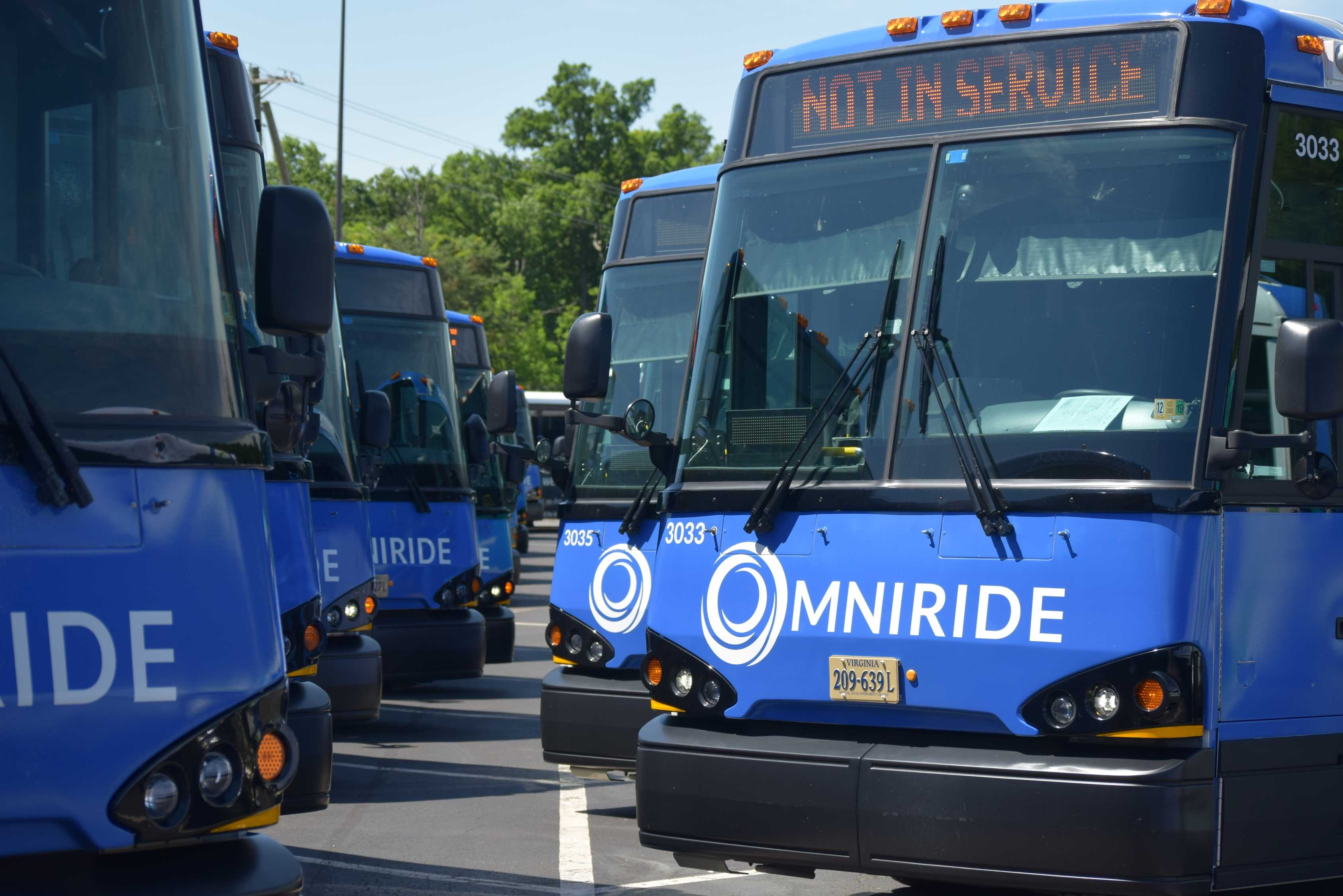
SUMMARY: The best ways to commute from Prince William County to Washington, D.C. in 2026 are not the same for every address, office, or budget. Commuters here have six real options: the VRE Manassas Line, VRE Fredericksburg Line, OmniRide Express buses, OmniRide Metro Express, the I-66 and I-95 Express Lanes, and slugging — the region's free casual carpool system. The decision comes down to which side of the county you live on, where your office actually is, and whether you can form an HOV-3 carpool. The short verdict: VRE wins for downtown D.C. desk jobs near Union Station or L'Enfant, OmniRide wins for the Pentagon and Tysons, slugging is the cheapest commute in America if you live near Woodbridge, and paying solo tolls on I-66 every day is the most expensive habit in Northern Virginia.
Every week I talk to buyers relocating to Prince William County, and the first question is never about granite countertops. It's some version of this: "The house is perfect, but how do I actually get to work?" They've heard about I-66 tolls hitting $40. They've heard a coworker mention something called slugging and assumed it was a joke. They're staring at a map trying to figure out whether Gainesville or Woodbridge makes more sense for their office at the Navy Yard.
The real question isn't "how bad is the commute from Prince William County" — it's three sharper questions: should you take the VRE or drive from Manassas to D.C., how much do the I-66 Express Lanes actually cost per month, and what's the cheapest way to commute from Woodbridge to the Pentagon. Answer those three and the neighborhood decision often makes itself.
I've lived in this county my whole life — my family has been here for generations — and I've watched the commute evolve from HOV-only lanes to a 97-mile express lanes network, two commuter rail lines, and a bus system that runs straight down the toll lanes for a fraction of what solo drivers pay. I've also sold hundreds of homes where the commute plan was the deciding factor between two nearly identical houses.
By the end of this guide you'll know exactly which option fits your address and your office, what each one costs in 2026, and the handful of local realities — like what time the Horner Road lot actually fills up — that no relocation packet will tell you.
What's In This Guide
- Understanding the NoVA Commute: Rail, Bus, or Lanes
- Quick Comparison Table
- VRE Manassas Line
- VRE Fredericksburg Line
- OmniRide Express Buses
- OmniRide Metro Express
- Driving the I-66 & I-95 Express Lanes Solo
- Slugging & HOV-3 Carpooling
- Best Commute Options from Western Prince William (Gainesville, Haymarket, Bristow)
- Best Commute Options from Eastern Prince William (Woodbridge, Lake Ridge, Dumfries)
- What Commuting Costs in Northern Virginia in 2026
- Which One Is Right for You
- The Bottom Line
- Frequently Asked Questions
Understanding the NoVA Commute: Rail, Bus, or Lanes
Every commute option out of Prince William County falls into one of three camps: commuter rail, commuter bus, or the Express Lanes. Which camp fits you depends almost entirely on two things — which side of the county you live on (the I-66 corridor to the west or the I-95 corridor to the east) and where your office sits. There is no Metro station in Prince William County, so everything below is about bridging that gap.
Commuter Rail (VRE)
The Virginia Railway Express runs two lines through the county — the Manassas Line on the western side and the Fredericksburg Line on the eastern side — both terminating at Union Station in D.C. It's weekday, rush-hour, peak-direction service. If your office is a normal-hours desk job near L'Enfant Plaza, Crystal City, Alexandria, or Union Station, this is the calmest commute in Northern Virginia.
Commuter Bus (OmniRide)
OmniRide Express buses leave from commuter lots across the county and ride the Express Lanes toll-free straight to the Pentagon, downtown D.C., the Navy Yard, Tysons, and the Dulles Corridor. The bus does what the $30 toll does — bypasses the traffic — for a flat fare. It's the most underrated commute in the region.
The Express Lanes (Solo, HOV-3, or Slug)
Northern Virginia now has a 97-mile connected network of dynamically tolled express lanes across I-66, I-95, I-395, and I-495. Solo drivers pay whatever the algorithm says. Vehicles with three or more people ride free with an E-ZPass Flex set to HOV mode — which is exactly why slugging, the region's famous free casual-carpool system, exists on the I-95 corridor.
Quick Comparison: Commuting Options from Prince William County in 2026
| Option | Best For | Main Strength | Worth Knowing |
|---|---|---|---|
| VRE Manassas Line | Western PWC commuters to downtown D.C. | Predictable, seated, no traffic variable | Weekday rush hour only — no weekend or late-night trains |
| VRE Fredericksburg Line | Woodbridge and Rippon commuters to D.C. | Skips I-95 entirely; stops in Alexandria and Crystal City | Shares CSX freight tracks; occasional delays |
| OmniRide Express | Pentagon, downtown D.C., and Navy Yard workers | Rides the Express Lanes toll-free for a flat fare | SmarTrip only — no cash accepted on board |
| OmniRide Metro Express | Tysons and Silver/Blue Line offices | Bridges the county's Metro gap to Tysons and Franconia-Springfield | Adds a transfer; total trip depends on Metro reliability |
| Express Lanes (Solo) | Irregular schedules, flexibility above all | Door-to-door control; guaranteed 55+ mph in the lanes | Dynamic tolls — peak trips can run $10–$40+ each way |
| Slugging / HOV-3 | I-95 corridor commuters to the Pentagon and D.C. core | Completely free and often the fastest door-to-door | I-95 corridor only — there are no established slug lines on I-66 |
VRE Manassas Line

The Manassas Line starts at Broad Run station in Bristow — right off Route 28, with a large free parking lot — and stops at Manassas (Historic Downtown, walkable to Old Town), Manassas Park, Burke Centre, Rolling Road, Backlick Road, Alexandria, Crystal City, L'Enfant, and Union Station. Locals know the downtown Manassas station is the pleasant one: you can grab coffee on Battle Street and be on the platform in four minutes.
This is the answer for anyone in Bristow, Manassas, Gainesville, or Nokesville with a commute from Manassas to Washington D.C. that ends near L'Enfant Plaza, Crystal City, or Capitol Hill. Federal workers and contractors with SmartBenefits are the core ridership, and the transit benefit often covers most or all of the fare.
The differentiator is certainty. The first morning train leaves Broad Run at 5:01 AM and arrives at Union Station at 6:20 AM — about 79 minutes, every time, regardless of what's happening on I-66. No toll algorithm, no weather variable, and you can work the whole ride.
Broad Run, Manassas, and Manassas Park all sit in VRE's Zone 6. Under the fare chart in effect through this June, a Zone 6 single ride to D.C. ran $10.50 with a monthly pass just over $291 — a new fare chart took effect July 1, 2026, so check vre.org for the current numbers. Monthly passes price out at roughly 42 single rides minus 34 percent, and station parking is free.
The honest tradeoff: VRE is a weekday, rush-hour, peak-direction service. There are no weekend trains, no late evening options, and if your kid gets sick at 1 PM, you're solving a real logistics problem. Most VRE households keep a backup plan — usually a spouse pickup or a mid-day OmniRide connection.
VRE Fredericksburg Line
The Fredericksburg Line runs up the eastern side of the county with Prince William stops at Woodbridge (a full-service station next to the OmniRide Transit Center) and Rippon, then continues through Lorton, Alexandria, Crystal City, and L'Enfant to Union Station. The Woodbridge station's location matters more than people realize — it's the hub where rail, OmniRide local buses, and commuter lots all converge.
This is the strongest play for anyone comparing the VRE from Woodbridge to Washington D.C. against sitting in I-95 traffic. If your office is near any of the line's Arlington, Alexandria, or D.C. stations, the train removes the single worst commuting variable on the East Coast: the I-95 northbound merge.
The differentiator is the station list itself. Unlike the Manassas Line, the Fredericksburg Line's Virginia stops — Alexandria and Crystal City in particular — put you within a short walk of two of the region's fastest-growing job centers, including the Amazon HQ2 orbit.
Woodbridge and Rippon sit in Zone 5. Through this June that meant a $9.75 single ride to D.C. and a monthly around $270; as with the Manassas Line, verify current fares on vre.org since the July 1, 2026 fare chart update. Ten-trip tickets are the smart buy for hybrid workers going in two or three days a week.
The honest tradeoff: this line runs on CSX freight tracks, and freight has the right of way. Delays are not constant, but they're real, and regulars build a 15-minute cushion into anything important. If your job punishes lateness, pair the train with a slugging backup.
OmniRide Express Buses
OmniRide Express commuter buses depart from major commuter lots across the region — eastern and western Prince William, Manassas, Haymarket, Stafford, Spotsylvania, Front Royal, and Warrenton — and run down the I-66 and I-95 Express Lanes to the Pentagon, downtown D.C., the Navy Yard, and the Dulles Corridor. From western PWC, the Gainesville routes serve the Pentagon, L'Enfant Plaza, and Navy Yard, plus a Dulles Corridor/Reston/Herndon run.
This is the best-kept secret for anyone pricing an OmniRide commuter bus from Gainesville to the Pentagon or from Woodbridge into the District. Defense and federal employees make up much of the ridership because the routes were built around exactly those destinations.
The differentiator is simple math: the bus rides the same Express Lanes a solo driver pays $15–$30 to use at peak, and it does it toll-free while you answer email. You get the express-lane commute without the express-lane bill.
As of this writing, the standard Express fare is $11 one way with a SmarTrip card, routes operating along I-66 are discounted to $5.50, and a monthly unlimited pass runs $285. Commuter lot parking is free. OmniRide's local routes in the Manassas and eastern PWC area ran fare-free through June 2026 under a promotional program; check omniride.com for current local fares.
The honest tradeoff: buses are cash-free (SmarTrip or SmarTrip mobile only), schedules are built around peak commute windows, and a mid-day return requires planning. And while the lanes guarantee the highway portion moves, the last mile through D.C. surface streets still takes what it takes.
OmniRide Metro Express
OmniRide Metro Express routes solve Prince William County's defining transit problem — no Metro station — by shuttling riders to the nearest ones. The Manassas Metro Express connects Manassas Mall to the Tysons Metro station on the Silver Line roughly every 45 minutes, the Linton Hall route runs the Gainesville corridor express on I-66 to Tysons, and the Prince William Metro Express links the Route 1/Potomac Mills corridor to the Franconia-Springfield Blue Line station.
This is the route for anyone who needs a bus from Manassas to the Tysons Metro station — typically Tysons office workers, Reston-corridor tech employees, and anyone whose final destination sits on the Silver, Blue, or Yellow lines rather than near a VRE stop.
The differentiator is network reach. One transfer at Tysons or Franconia-Springfield opens the entire Metrorail map — something neither VRE nor the direct Express buses can offer.
Metro Express routes to Metro stations have been running fare-free under OmniRide's promotional fare program through June 2026, with normal SmarTrip fares otherwise modest compared to Express routes; you'll pay standard Metrorail fare for the rail leg. Between the free commuter lot parking and skipping Tysons parking rates entirely, the economics are hard to beat.
The honest tradeoff: two-seat rides are only as reliable as their weakest leg. When Metro single-tracks on the Silver Line, your smooth bus connection doesn't save you. Total door-to-door time to downtown D.C. usually loses to VRE or a direct Express bus.
Driving the I-66 & I-95 Express Lanes Solo
The 66 Express Outside the Beltway runs 22.5 miles from Gainesville to I-495 with entry points at Route 29, University Boulevard, and along the corridor; inside the Beltway, I-66 operates as express lanes to Rosslyn during peak periods. On the east side, the reversible I-95 Express Lanes run from the Fredericksburg area to the Pentagon. All of it is dynamically priced — the toll changes in real time to keep traffic moving at 55 mph or better.
Solo driving is for the parent doing daycare pickup at 5:45 sharp, the consultant with three site visits a week, and anyone whose schedule makes fixed departures impossible. If you're asking how much are tolls on I-66 from Gainesville to D.C., the honest answer is: it depends on the minute you enter the lanes.
The differentiator is total control. Your car, your schedule, your podcast, and a lane that's contractually obligated to move.
The costs are the story. Outside the Beltway, tolls are charged by segment at all times, with off-peak trips often in the single digits and peak-of-peak full-corridor runs climbing far higher; inside the Beltway, tolling applies weekdays 5:30–9:30 AM eastbound and 3–7 PM westbound. Regional data puts typical peak express-lane trips in the $10–$40 range each way. A daily solo I-66 commuter can realistically spend $400–$700 a month on tolls before gas and D.C. parking, which commonly adds another $250–$400.
The honest tradeoff: dynamic pricing means the days you most need the lanes are the days they cost the most. A crash on the general-purpose lanes sends the toll soaring at the exact moment you're deciding. Budgeting for this commute is like budgeting for weather.
Slugging & HOV-3 Carpooling
Slugging is Northern Virginia's original commuting hack: drivers who want to ride the I-95 Express Lanes free under the HOV-3 rule pull up to designated lines at commuter lots, call out a destination — "Pentagon," "14th Street," "Navy Yard" — and the first riders in line get in. No money changes hands, no apps, no scheduling. The epicenter is the Horner Road commuter lot in Woodbridge, with about 2,300 spaces plus another 730 at the Telegraph Road overflow lot, and established lines to the Pentagon, Crystal City, Rosslyn, 14th Street, 18th Street, and L'Enfant/Navy Yard.
This is the definitive answer to the cheapest way to commute from Woodbridge to the Pentagon — because the cost is zero. Riders commute free; drivers get a free, fast express-lane trip by picking up two passengers and flipping their E-ZPass Flex to HOV mode.
The differentiator is unbeatable economics paired with speed. A slug from Horner Road to the Pentagon at 6:30 AM frequently beats every other option in this guide door-to-door, and it costs less than all of them combined.
The numbers that matter: HOV-3+ vehicles with an E-ZPass Flex ride the I-95, I-395, I-66, and I-495 Express Lanes free. Horner Road is an early lot — active from about 5:30 AM and typically full by 7:00, at which point the action shifts to the Telegraph lot across the street. Return lines form at the same D.C. and Pentagon locations in the evening.
The honest tradeoff: slugging is an I-95 corridor institution — there are no established slug lines on the I-66 side of the county, so Gainesville and Haymarket residents are largely out of luck. And the return trip is the weak link: miss the prime evening window and lines thin out fast. Every experienced slug keeps an OmniRide or VRE backup in their pocket.
Best Commute Options from Western Prince William (Gainesville, Haymarket, Bristow)
Western Prince William lives on the I-66 corridor, which reshapes the decision entirely: no slugging, full express-lane tolling, and two strong transit anchors. If your office is downtown D.C., the VRE Manassas Line from Broad Run or downtown Manassas is the default — predictable, seated, and cheaper monthly than three weeks of peak tolls. If you work at the Pentagon, the Navy Yard, or along the Dulles Corridor, the Gainesville OmniRide Express routes are purpose-built for you, and the discounted I-66 route fare makes them the best value in the county.
For Tysons workers, the Linton Hall Metro Express to the Tysons Silver Line station beats paying to park in Tysons every single day. Solo driving on the 66 Express makes sense as a flexibility tool — the two days a week you need it — not as a five-day habit. Families shopping in Gainesville and Haymarket routinely tell me the commuter lot on University Boulevard was a bigger factor in their offer than the kitchen.
Best Commute Options from Eastern Prince William (Woodbridge, Lake Ridge, Dumfries)
Eastern Prince William sits on the I-95 corridor, where the commuting culture is older, deeper, and cheaper. Slugging from Horner Road is the headline: free, fast, and running on an honor system that has worked since before the Express Lanes existed. Pair it with the VRE Fredericksburg Line from Woodbridge or Rippon as the weather-proof backup and you have the most resilient two-option commute in Northern Virginia.
OmniRide's eastern routes — including Lake Ridge to Washington and the Prince William Metro Express to Franconia-Springfield — fill in the destinations the train and slug lines don't reach. The Route 1 corridor's proximity to the Woodbridge station is quietly becoming one of its best selling points as Potomac Shores and the surrounding communities grow; I tell buyers there that they're purchasing three commute options, not one.
What Commuting Costs in Northern Virginia in 2026
Here's the monthly math for a five-day-a-week commuter from Prince William County to the D.C. core, using figures current as of this writing. Slugging: $0, plus whatever your conscience spends on coffee. OmniRide Express: $285 for a monthly unlimited pass, with I-66 routes cheaper per ride at $5.50 each way. VRE: roughly $270–$291 monthly from the county's Zone 5 and Zone 6 stations under the chart in effect through June, with a new fare chart effective July 1, 2026 — and note that employer SmartBenefits frequently cover several hundred dollars of that. Solo Express Lanes driving: realistically $400–$700 in tolls at peak schedules, plus $250–$400 for D.C. parking, plus fuel — a five-day solo toll commute can exceed $1,000 a month all-in.
Two things drive the differences. First, the Express Lanes' dynamic pricing charges you the most precisely when demand peaks — transit and HOV riders are exempt from that auction. Second, hybrid schedules change everything: a three-day commuter should price VRE ten-trip tickets and per-ride bus fares against a monthly pass before defaulting to either. For most two-worker households I advise a split strategy — one transit pass, one flexible driver — because it caps the downside of both.
Which One Is Right for You
| Your Situation | Start Here |
|---|---|
| You live in Gainesville, Bristow, or Manassas and work a desk job near L'Enfant, Union Station, or Crystal City | VRE Manassas Line — predictable 79-minute ride, free parking, SmartBenefits-friendly |
| You live in Woodbridge, Lake Ridge, or Dumfries and work at the Pentagon or in the D.C. core | Slugging from Horner Road — free, fast, with VRE or OmniRide as the backup |
| You work at the Pentagon, Navy Yard, or Dulles Corridor from western PWC | OmniRide Express (Gainesville routes) — express-lane speed at the $5.50 I-66 fare |
| Your office is in Tysons or anywhere on the Silver or Blue Line | OmniRide Metro Express — one transfer opens the whole Metro map, no Tysons parking bill |
| Your schedule is unpredictable — school pickups, site visits, shift work | Express Lanes with E-ZPass Flex — pay for flexibility only on the days you need it, and grab HOV-3 free rides whenever you can fill the car |
The Bottom Line
If I had to hand a relocating buyer one default answer, it's this: on the western side of the county, take the VRE Manassas Line if you work downtown and OmniRide if you work at the Pentagon or in Tysons. On the eastern side, slug from Horner Road and keep the Fredericksburg Line as your bad-weather insurance. Those combinations beat solo driving on cost by hundreds of dollars a month and beat it on sanity by more than that.
The strongest alternative is the hybrid play: an E-ZPass Flex in the glovebox, a ten-trip VRE ticket in the app, and the discipline to pay peak tolls only when the day genuinely demands it. In 2026, the commuters who suffer aren't the ones who live far out — they're the ones who never built a system.
And if you're choosing between neighborhoods right now, flip the analysis: pick the commute first, then the house. A Gainesville address is buying the I-66 toolkit; a Lake Ridge address is buying the I-95 toolkit. They are different products, and knowing which one fits your job is worth more than any upgrade the builder will offer you.
"Broad Run, Manassas, and Manassas Park are in VRE Zone 6. Under the fare chart in effect through June 2026, a single ride to D.C. was $10.50 and a monthly pass was just over $291. A new fare chart took effect July 1, 2026, so confirm current prices on the official VRE fares page before buying." "About 79 minutes. The first morning train departs Broad Run at 5:01 AM and arrives at Union Station at 6:20 AM, with stops including Manassas, Burke Centre, Alexandria, Crystal City, and L'Enfant along the way. Full timetables are on the official VRE schedule page." "No. VRE operates Monday through Friday during rush hours in the peak direction only — toward D.C. in the morning and toward Broad Run or Fredericksburg in the afternoon. There is no weekend or late-night service." "Tolls on the 66 Express Lanes are dynamic and charged by segment, so there is no fixed price. Off-peak trips often cost a few dollars, while peak-period trips across the corridor commonly run into the $10–$40 range each way. Current estimated tolls are posted on the official 66 Express pricing page. Vehicles with three or more occupants ride free with an E-ZPass Flex set to HOV mode." "Carry three or more people in the vehicle and mount an E-ZPass Flex transponder switched to HOV mode — transponders are issued through E-ZPass Virginia. Motorcycles also ride free. Two-person carpools pay the posted toll on I-66."Frequently Asked Questions About Commuting from Prince William County in 2026
How much does the VRE cost from Manassas to Washington, D.C.?
How long does the VRE take from Broad Run to Union Station?
Does the VRE run on weekends?
How much are tolls on I-66 from Gainesville to D.C.?
How do I ride the I-66 Express Lanes for free?
About The Colgan Team
Getting the commute right is what makes a Prince William County address work — and so does working with a team that knows which neighborhoods put you five minutes from the train, the commuter lot, or the express-lane ramp.
The Colgan Team at Real Broker has closed more than $1 billion in career sales across Fairfax, Prince William, Loudoun, Arlington, and the surrounding counties, backed by 700+ five-star reviews. Our roots here run generations deep — the Colgan name is on the high school in Manassas — and we've helped hundreds of relocating families choose the right side of the county for the commute they actually have.
Thinking about buying or selling in Prince William County? Reach out at info@colganteam.com, call 571-437-7575, or start your search at ColganTeam.com.
Enjoy this blog post? Click here to subscribe for updates
Leave A Comment