
I’m sure you’re wondering what makes an urban legend good. Well, it’s definitely not historical accuracy or true fact. What makes the greatest urban legends is the amount of extremity. Northern Virginia’s local myths are terrific because they’re out-there; they’re hilariously inventive and so obviously wrong. But, at the end of the day, these folklore tidbits really show just how creative (and sometimes dark) Northern Virginians can be. All in all, folklore like this is a testament to how much us silly humans want to resolve any local unknowns.
Bunny Man Bridge
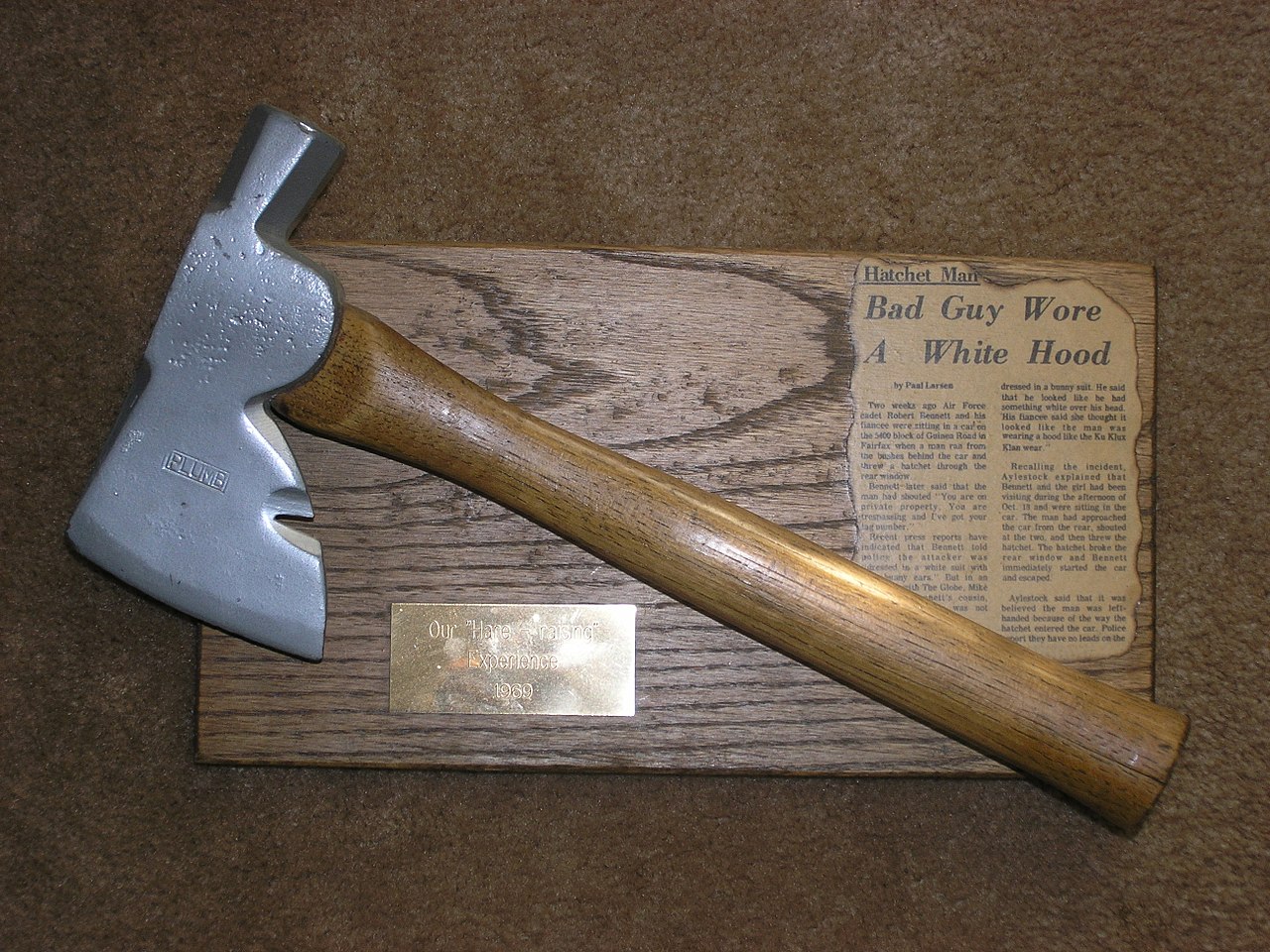
"Bunny Man Hatchet" photo provided by KeeferC under Creative Commons Attribution-Share alike 4.0 international license
The legend of Bunny Man Bridge is the most famous of all the Northern Virginian tall tales. It’s so well known that the Bunny Man has his very own Wiki page; it’s local to NoVa, but the urban legend is established enough that residents across D.C and Maryland know of it well. Bunny Man was thought to have been a psychopath dressed up in a strange rabbit suit who went around attacking people with a hatchet and/or axe. These stories have allegedly happened in many places within Northern Virginia, but historian-archivist Brian A. Conley determined that there were two stories in particular that brought the rumor to urban legend status.
These two stories are about vandalism that was done only ten days apart in Burke, Virginia.The first story: U.S. Air Force Academy Cadet Robert Bennett drove up a suburban street in Burke to park his car. Bennett and his fiancée were planning on visiting family. When they found a spot and parked, a man approached their car, yelling, “you’re parked on private property and I have your tag number”. The man then threw a hatchet at them, and fled the scene.
When the police took their report, Bennett said the man had been wearing a white rabbit suit, but his wife argued it was more of a capirote, a pointy hat used in Christian celebrations across Spain and Italy (and appropriated by the KKK). The police couldn’t get a lead from this, nor from the hatchet wedged in Bennett’s car, and the case was ultimately left unsolved.
The second report was made by a construction security guard named Paul Phillips who claimed to have been approached by a man in a multi-colored bunny suit. The man allegedly yelled at Phillips about trespassing, and started hacking into a porch post during the conversation. No leads emerged from this event either, but the news spread like wildfire and soon dozens of people were contacting NoVa police precincts to report sightings of the alleged Bunny Man.
For some odd reason, Colchester Overpass has become home to the Bunny Man legend, despite neither report having anything to do with the bridge. Still, if you want to try and spot the Bunny Man, this is where paranormal enthusiasts and legend seekers come to.
The Headless Zouave of Bull Run
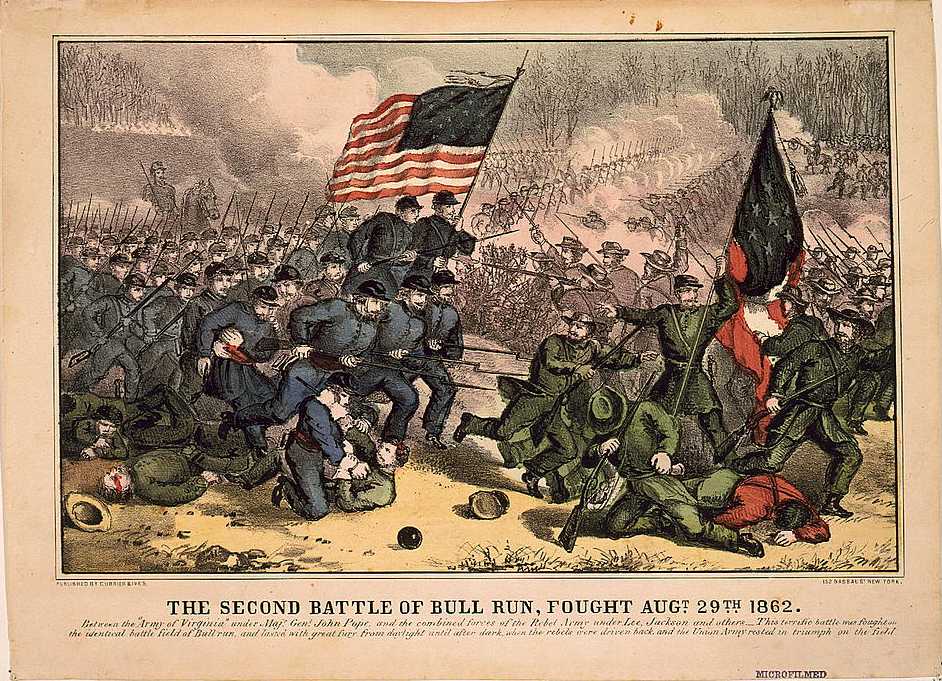
Published by Currier & Ives, [1862?]
This is a grim story; probably the most macabre in the list. The Second Battle of Manassas took place during the Civil War and was a decisive win for the South, marking an uneasy turning point in the war.
The 5th New York was a regiment of soldiers who fought during said battle. This combat troop was modeled after the French’s most decorated infantry, “Zouaves”, and in turn, their uniforms were very French.
During the Second Manassas (as the battle was nicknamed) a whopping 347 out of 594 men were slaughtered. Legend has it that one of these soldiers— sporting a traditionally colorful red shirt, little cap and a pair of ballooning pants— was decapitated by artillery fire.
He now allegedly roams what was once the battlefield searching for his missing head. One thing to note: crossing the NPS boundaries at night is illegal, so don’t try to catch the headless Zouave.
Marie’s Road
There’s a road in Sterling called Marie’s Road. Nowadays it’s well paved and maintained, but back in the ‘90s it was just some dirt and gravel that led to a dead end. Though the area is rich with colonial history, there's no historical documents that indicate why the road is called Marie’s road.
Humans don’t like those kinds of mysteries; we’re always trying to give indeterminable facts a rationale. So circa the early ‘90s an urban legend was born around why Marie’s road was named such. There used to be an old abandoned house on that street— it was torn down and a road was paved over the plot of land. It was nearly falling apart.
People started talking about a woman named Marie who allegedly went missing around there, and was assumed to have been killed in that creepy, unoccupied home. Northern Virginians say different things about triggering Marie’s appearance. Some say if you went there at a particular hour. Others argue that you have to drive there and beep your horn 3 times. Even more say you have to flash your lights to see Marie’s ghost.
Midgetville
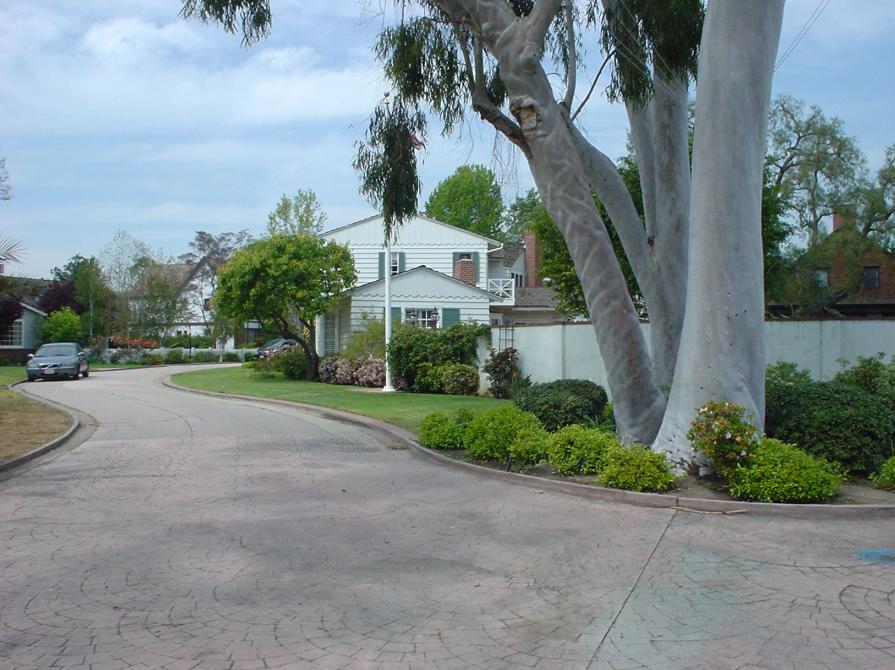
Midgetville is one of the sillier legends amongst Vienna locals. Back in 1882, some land in Vienna was home to a summertime resort that wealthy D.C residents would come out to for some relaxation. In 1892, Alexander Wedderburn bought the land, and unfortunately for him, nine years later the hotel burnt to the ground. Around the same time, Wedderburn had a two-story, decently sized home built on the property. It wasn’t until nearly thirty years later that the legend of midgetville came to be.
Wedderburn’s son, George, built six unusually small Spanish-style cottages on the property. These tiny structures were originally rented out, but at one point or another they were overtaken by nature. Trees grew, towering over them, and ivy started to plague the area. In 2008, to much dismay, the houses were torn down to make room for “Wedderburn Estates”.
Locals noticed that the teeny-tiny houses were situated between two pieces of property owned by Barnum & Bailey’s Circus. With the cottages smack in the middle of Barnum & Bailey’s winter animal storing facility, and the circus’s headquarters, people put two and two together (or, at least, they thought they did), and started to assume that retired circus midgets settled in George’s quaint homes.
What didn’t help this rumor was the fact that “Midgetville” residents hated visitors. Curious onlookers and passerbyers would get cursed at, thrown out or chased, and said visitors swore up and down that the perpetrators were far tinier than the average person.
Old Man Johnson
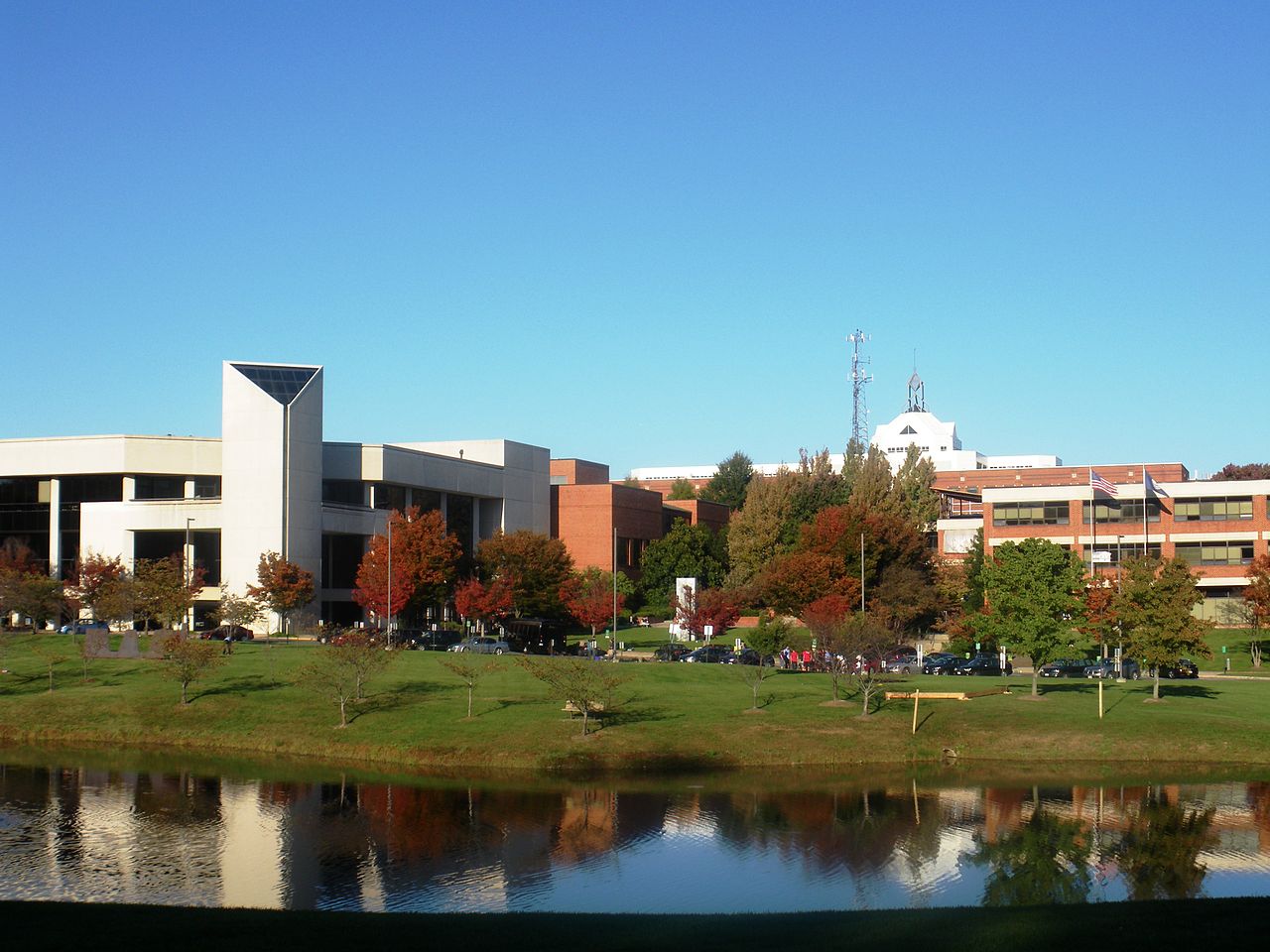
"George Mason University in Fall 2012" by Lucien Dalarun, licensed under Creative Commons Attribution-share Alike 3.0 unported license
The legend of Old Man Johnson lies around George Mason University. As the story goes, Johnson was a rower in Fairfax circa the 1970s. After a day of rowing, he allegedly returned home to find his wife having an affair. Heartbroken, the man went back to his trusty rowboat, and paddled off into the night, never to be seen again. There’s not much else to this one. It’s a bit sad, but also one of the more plausible stories, echoing familiar tropes.
There’s absolutely no evidence to back this one up, but the George Mason rowing team claims that their equipment and boats have been shuffled around with no explanation.
Walney Road Hitchhiker
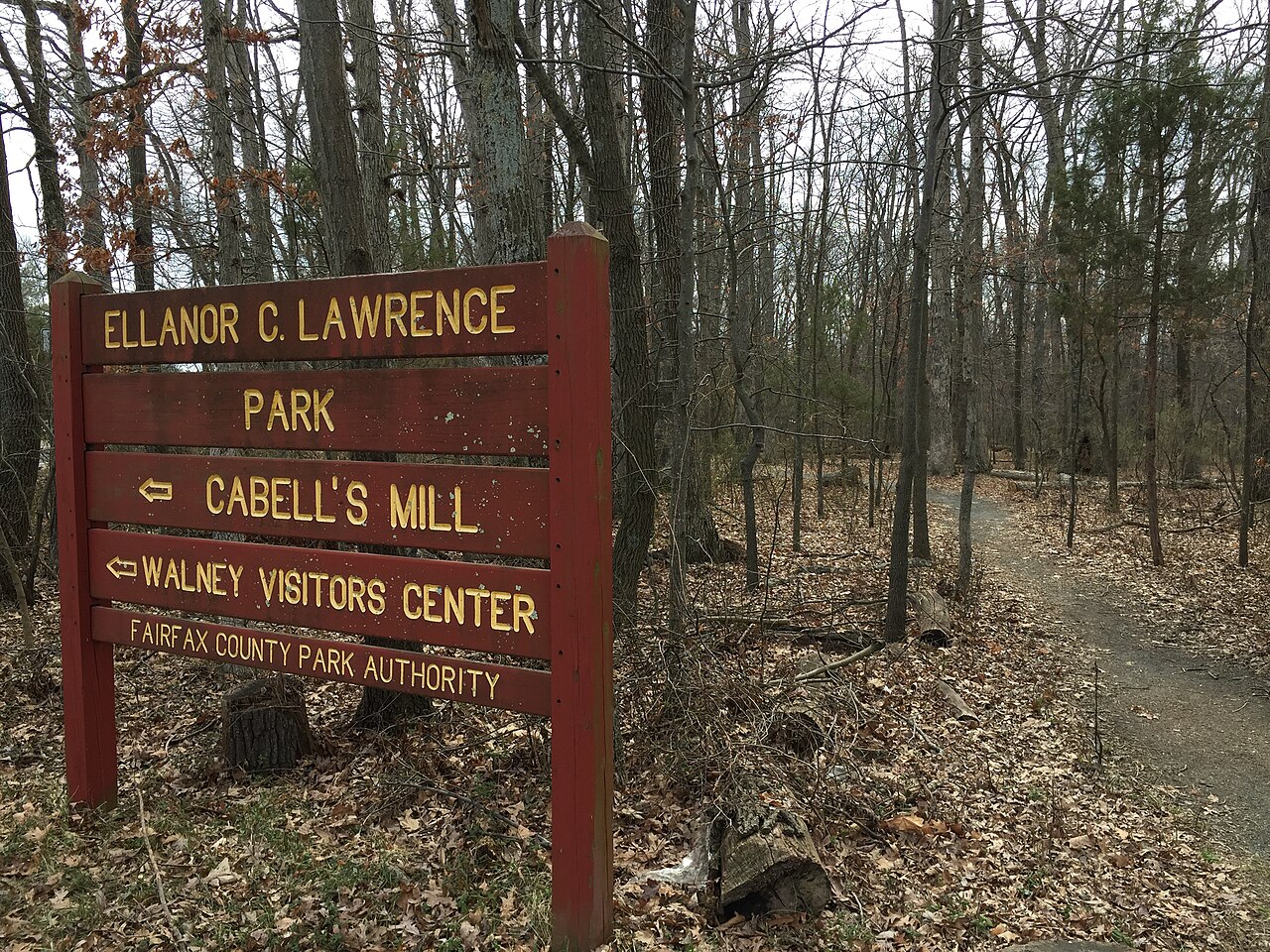
"Sign for Ellanor C. Lawrence Park at the Intersection of Walney Road and Poplar Tree Road" courtesy of Famartin, licensed under Creative Commons Attribution-share Alike 4.0 International license
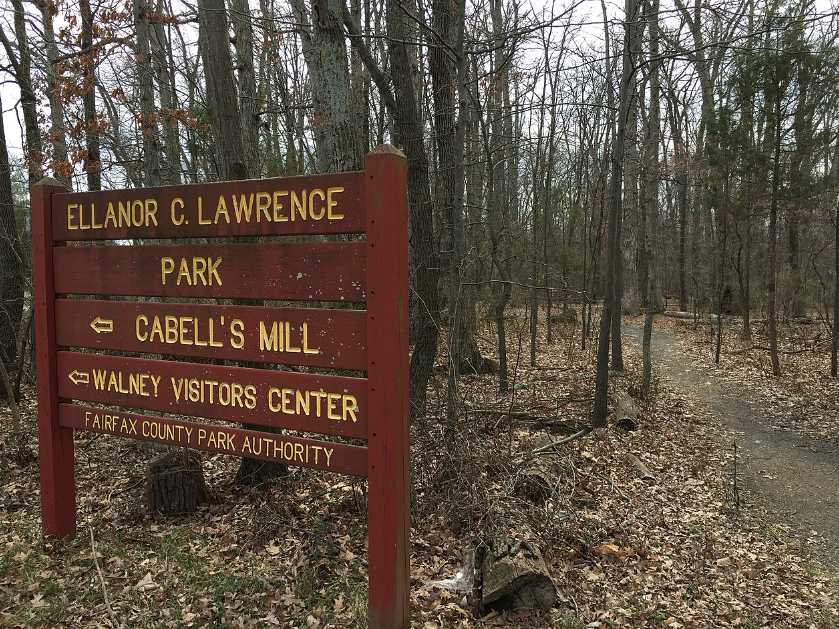
Walney Road lies in Chantilly. It’s a bit of a curvy road that stretches out below big bushy trees. Even though it’s in a busy enough place, the paved path feels lonely nonetheless. The hitchhiker urban legend was partly inspired by the fact that the road has car crashes with a really high rate for fatality. Like many tall tales, there are certain required conditions to see the alleged Walney Road hitchhiker, like particular times at night and specific days of the week.
Legend has it that a hitchhiker will appear. This hitchhiker is presumed to have died in an accident years prior. If the driver accepts the Hitchhiker upon first request, the figure mysteriously vanishes. If the driver doesn’t, the hitchhiker may appear further down Walney Road, not only once but twice. By the third time, the hiker appears in the back seat, frightening the driver and causing them to crash. It seems Northern Virginians wanted a paranormal explanation to the high incidence of fatal car accidents. The sentiment is sort of comforting.
The Walney Road Hitchhiker myth is reminiscent of the all-too-common vanishing hitchhiker trope in books and film. It’s folklore that many small American towns adopt, but Northern Virginia shapes it around a particularly spooky road.
Old Town’s Goosepigs
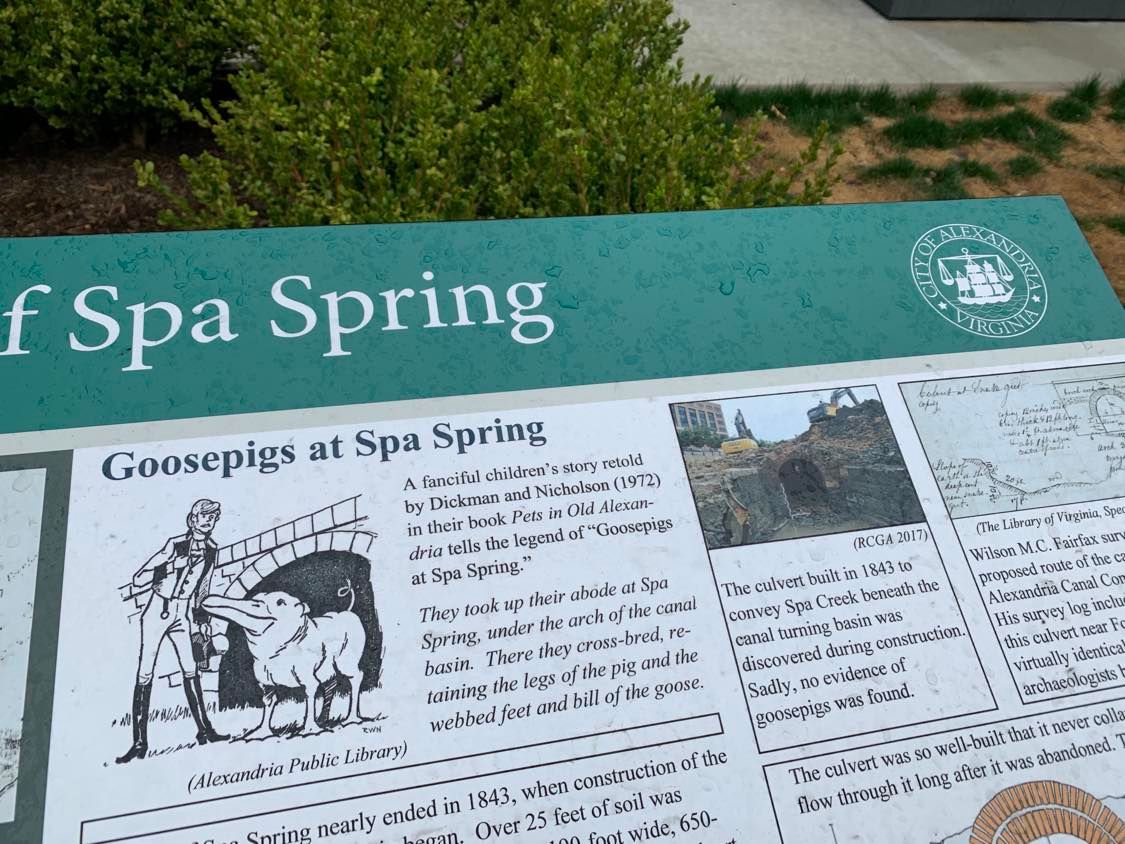
Photo from Spa Spring historical marker/public domain
This is definitely the most absurd of all Northern Virginia urban legends. In the early 1800s rumor had it that there was a species of animal with the body of a pig and a beak like a goose. They’re fairly cute looking creatures, and if you’re curious about what they look like there’s a sign in Old Town Alexandria by Spa Spring. The local lore has stuck around for nearly 200 years making it very nostalgic— and also the oldest legend in the area
One of the stories that popularized the strange Goosepig was the 1972 children’s book “Pets” by Dickman and Nicholson. The original anecdote was shared in 1928 by Mary Powell in her book “The History of Old Town Alexandria”. City historian Daniel Lee has said Powell was writing down older oral stories.
The legend comes from an issue with geese and pigs scattering amongst busy streets, something that was supposed to be put to rest by a prohibition of such by the Act of General Assembly. Rumors say that the loose feed and pigs were taken under the Alexandria canal basin where people began cross breeding them there.
The Reston Ebola Monkeys
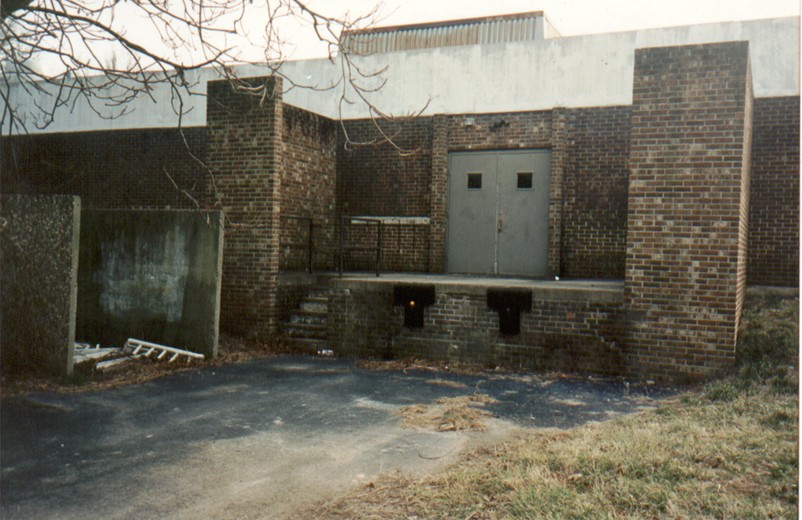
photo courtesy of Jan Bradshaw
This is not an urban legend, and instead is the only proven historical event on the list. Still, the Reston Ebola Monkeys are so crazy that they sound simply like folklore. It was 1989 when this case emerged in the Reston Primate Quarantine Unit, which sounds like something straight out of a bad movie. But it’s far scarier than some schlocky flick: after dozens of lab monkeys started to die.
At first glance, experts thought this was the “Zaire” strain which was the most well-researched type of Ebola and has a 90% fatality rate in humans. See, it’s hard to differentiate between types of Ebola because under microscopic review, all of the varying types look nearly identical.
Luckily, the Ebola monkeys were infected with a never-before-seen strain that was harmless to humans. Thus, the new variety was classified as the “Reston strain” to honor its discovery in the area. This was a huge breakthrough. When Reston Ebola was identified, the scientific community realized how much information was lacking about filoviruses like Ebola, like how they could mutate, travel continents, and jump into animals undetected.
If you’re interested in a really deep dive on this one, author Richard Preston’s book, “The Hot Zone” covers a lot of the nitty-gritty details. In a disturbing twist of fate, a daycare was built over the primate quarantine lab after it was cleaned up.
To Wrap This Up
Urban Legends are a fun way to commemorate local hotspots, people or history and no one does that better than Northern Virginia. The folklore here ranges from creative and silly to dark and disturbing to historically informative. If you ever want to share some quirky NoVa knowledge, this list has got it.
Posted by Lauren Weiner on
Enjoy this blog post? Click here to subscribe for updates
Leave A Comment